Venue behaviour, format shifts, and budget patterns shaping business event planning across London and the UK.
Defining “corporate events” in 2026
Corporate events and meetings are often discussed as though they belong to the same planning category. They don’t. A meeting typically involves a small group, a room, and a fixed agenda – a dozen people around a table for two hours. A corporate event is a different proposition: larger headcounts, longer lead times, higher financial exposure, and a far wider set of operational variables.
This guide focuses on business events at scale, company offsites, conferences, training days, product launches, client entertainment, town halls, and internal company gatherings. These are the formats where venue selection, capacity planning, production, catering, and logistics all converge into a single planning challenge. They carry reputational risk. They require sign-off from multiple stakeholders. And they tend to be judged not on whether the Wi-Fi worked, but on whether the event justified the investment.
In 2026, the planning environment for these events is shaped by rising supplier costs, tighter budget scrutiny, and a growing expectation that every gathering should deliver a demonstrable business outcome. For planners sourcing corporate event venues in London or elsewhere in the UK, understanding where demand is shifting – and why – matters more than following trend lists.
Business event formats seeing increased demand
Several corporate event formats are attracting more attention from planners in 2026, driven by structural changes in how organisations operate.
Company offsites
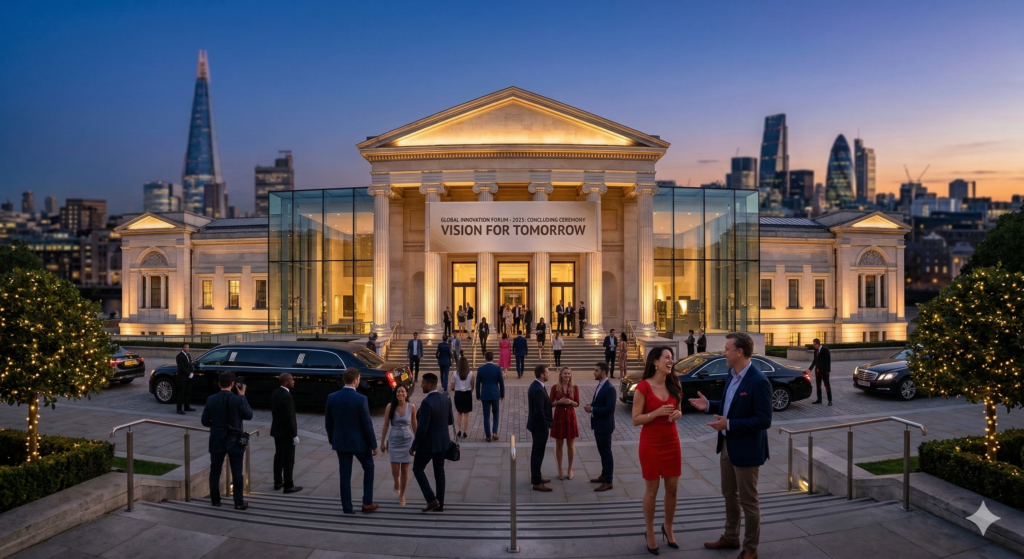
Offsites remain one of the most consistently booked formats, particularly among organisations with hybrid or fully remote workforces. With the majority of companies now operating some form of distributed work arrangement, offsites have become the primary mechanism for in-person alignment. They tend to run one to three days, blend structured sessions with social programming, and are increasingly booked outside traditional conference hotels. The emphasis has shifted toward venues that offer a distinct environment – somewhere that feels different from the day-to-day office or home workspace.
Conferences and forums
Conferences continue to attract investment, though the format itself is evolving. Sessions are getting shorter, networking breaks are getting longer, and guest lists are becoming more selective. Planners commonly report that smaller, higher-intent audiences tend to generate better outcomes than large-scale open-registration events. The logic is straightforward: fewer attendees who are closely aligned with the event’s purpose tend to produce more meaningful engagement and stronger post-event follow-through.
Training days and workshops
Training days at event scale – not meeting-room scale – are growing steadily. Organisations are using these formats to support transformation programmes, leadership development, and operational change. The distinction from a standard training session is one of ambition and production: dedicated venues, breakout configurations, facilitated sessions, and often a full-day or multi-day structure.
Product launches
Launches remain a priority for organisations that rely on physical, in-room experience to communicate a product’s value. Planners booking launches tend to prioritise venues with strong production capabilities, flexible staging, and high visual impact.
Internal company events
Town halls and all-hands gatherings are seeing renewed demand. For distributed organisations, these events serve a cultural function that video calls cannot replicate. Virtual formats are being used for global reach, but in-person town halls are increasingly viewed as strategic moments for leadership visibility and organisational cohesion.
Formats seeing flatter or declining demand
Not all formats are growing. Large-scale hybrid events – those attempting to serve both in-person and remote audiences simultaneously – are being approached with more caution. The operational cost of running two parallel experiences is significant, and many planners have found that the quality of one or both audiences tends to suffer. Where hybrid does persist, it tends to be reserved for genuinely global audiences where geography presents a real barrier to attendance.
Lavish, high-headcount corporate entertaining events are also being booked more selectively. Budget holders are scrutinising spend more closely, and events that lack a clear business purpose face harder internal approval processes. This doesn’t mean client entertainment is disappearing – rather, it’s being designed with more intent and often with smaller, more targeted guest lists.
Venue selection behaviour for business events
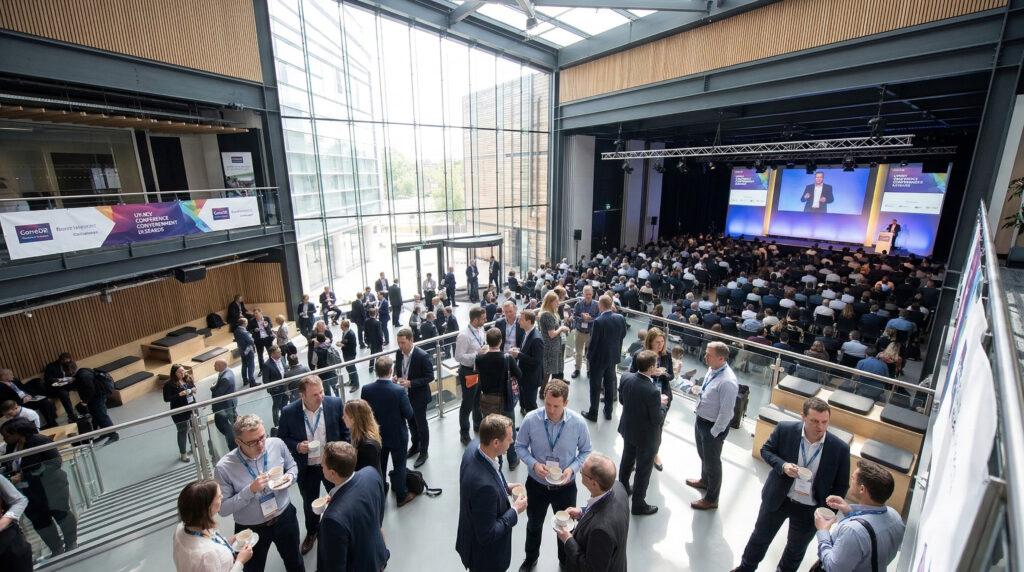
When booking venues for corporate events, planners tend to weigh reliability, capacity, and operational support more heavily than novelty or aesthetics. Hotels remain a common choice for multi-day events because they consolidate accommodation, catering, and event space under one roof. However, dedicated event venues and purpose-built conference spaces are increasingly favoured for single-day or high-production events, where technical infrastructure and flexible layouts matter more than bedrooms.
Experiential and non-traditional venues – galleries, warehouses, cultural spaces – attract interest for product launches and client entertainment, but planners often flag higher logistical risk with these sites. Questions around staffing, catering access, AV infrastructure, and load-in requirements tend to be more complex in non-purpose-built spaces.
A practical filter many planners apply is whether a venue can manage the full operational scope of a business event without excessive reliance on external suppliers. Venues with in-house AV teams, experienced event coordinators, and proven catering operations tend to reduce planning friction and day-of-event risk. Planners comparing large corporate event venues in London often prioritise this kind of operational self-sufficiency.
Venue shortlisting in practice: For events above 100 attendees, planners commonly filter first on capacity and transport access, then on AV capability and catering model, and only then on aesthetics or brand fit. Venues that fail the operational filter tend not to reach the shortlist regardless of how distinctive the space may be.
Location patterns for corporate events
London: central vs. fringe
London continues to be the dominant location for corporate events in the UK, driven by transport connectivity, international accessibility, and the density of venue options. However, the distribution of bookings within London is shifting.
Rising costs in central zones are encouraging planners to look at well-connected fringe locations. Areas in Zones 2 and 3 that benefit from recent regeneration and improved transport links – such as parts of east and south London – are becoming more attractive for events that don’t require a prestige postcode. The calculation is often simple: comparable venue quality at a meaningfully lower cost with acceptable travel times for attendees arriving by rail or tube.
Regional and secondary cities
Outside London, secondary cities including Manchester, Birmingham, Edinburgh, and Liverpool are seeing increased corporate event activity. Infrastructure investment in these cities has expanded the range of credible venue options, and for organisations with nationally distributed teams, a regional location can reduce travel complexity and cost.
“Single-destination day” logic
A pattern that planners frequently reference is choosing a venue where attendees can arrive, attend, and depart without needing overnight accommodation or multiple transport connections. This is particularly relevant for training days, town halls, and one-day conferences, where the event’s value proposition needs to justify the time commitment without adding travel friction.
Capacity planning and space configuration
Corporate events in 2026 tend to be planned with tighter headcount discipline than in previous years. The shift toward smaller, higher-intent audiences means planners are often working with more precise numbers, but they still build in capacity buffers – typically allowing for fluctuations of around 10-15% above confirmed registrations.
Breakout space has become a standard expectation for events beyond a basic plenary format. Conferences, training days, and offsites almost always require secondary rooms or flexible zones for smaller group work, informal networking, or quiet focus time. Venues that offer only a single large room with no adjacent breakout capacity are often at a disadvantage when planners are comparing shortlists.
Indoor-outdoor flexibility is increasingly valued, particularly for events running through spring and summer. Access to terraces, courtyards, or garden areas allows planners to vary the rhythm of a day and provide attendees with a change of environment between sessions. This is less about aesthetics and more about managing attention and comfort across a long programme.
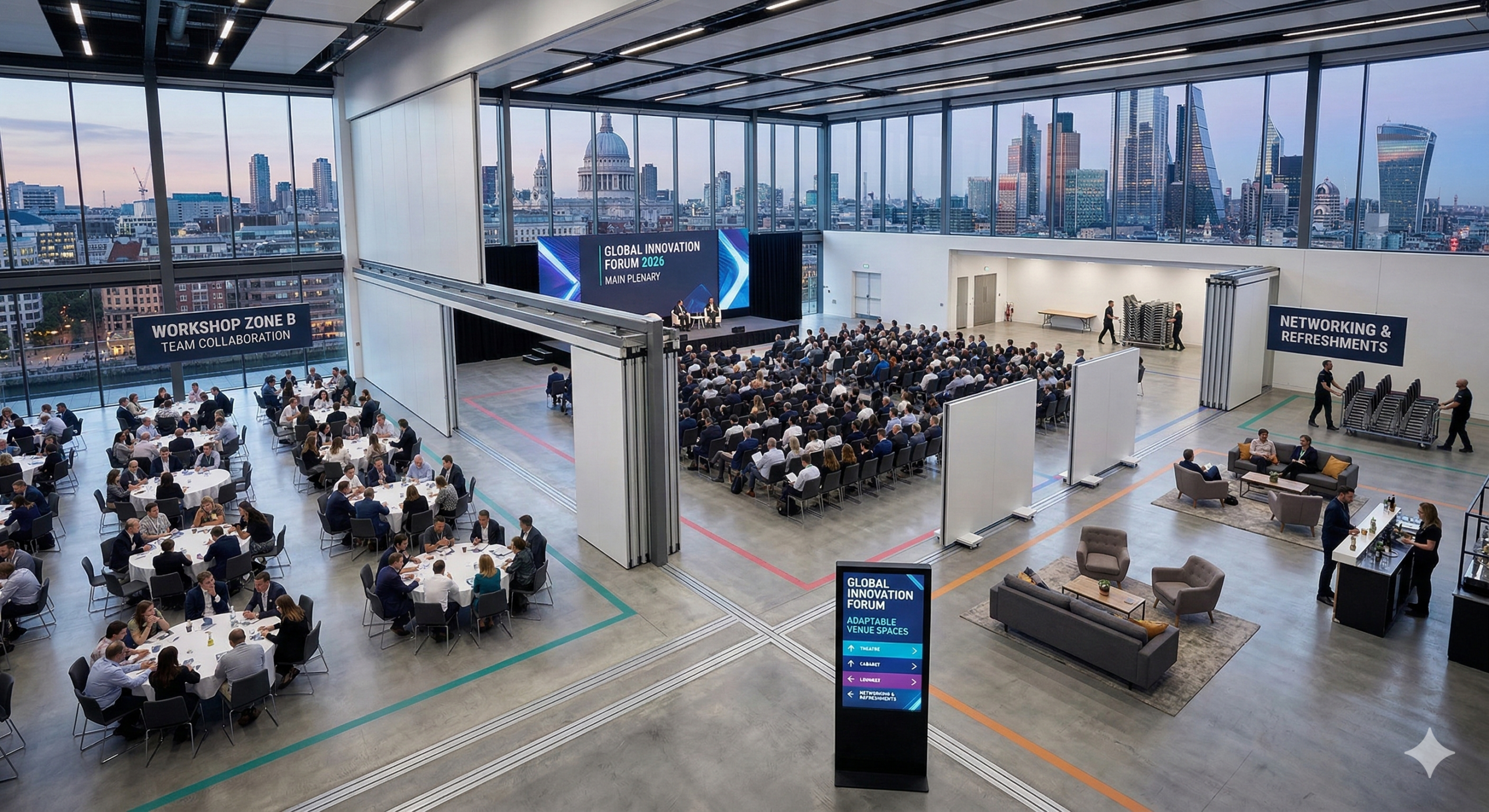
For planners assessing options across venues in London, the ability to configure space flexibly – theatre-style for a keynote, cabaret for workshops, open-plan for networking – is often a deciding factor.
Technology and production expectations
The baseline
The technology baseline for corporate events has risen considerably. Reliable, high-speed Wi-Fi, professional-grade sound reinforcement, high-resolution display screens, and competent lighting are now treated as standard expectations rather than premium add-ons. Planners are less likely to shortlist a venue that cannot demonstrate these fundamentals.
What differentiates higher-spec venues
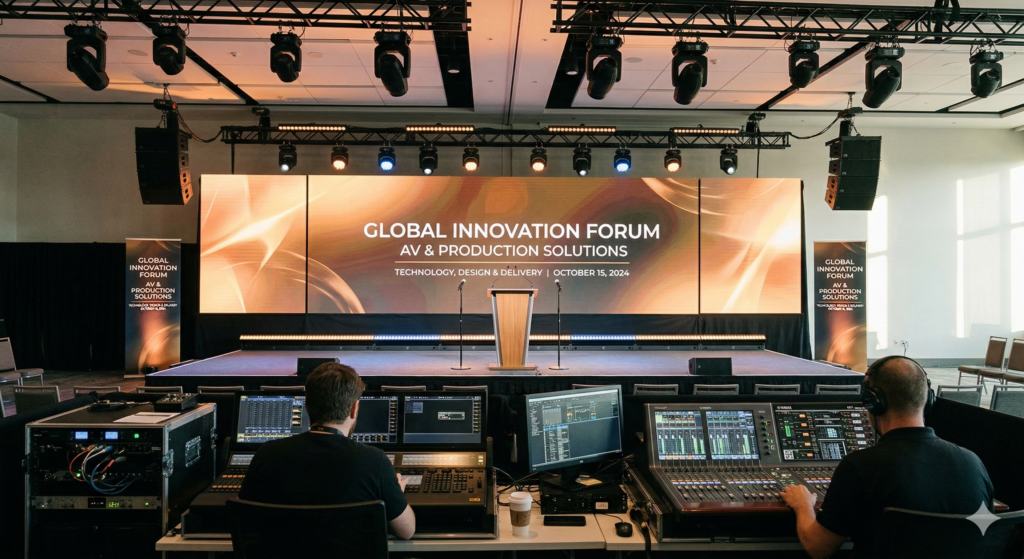
What sets higher-specification venues apart is typically the depth of their in-house technical capability. Venues with dedicated AV teams, integrated streaming infrastructure, and the ability to support complex staging or multi-screen configurations attract bookings for events where production quality directly affects the audience experience – product launches, large-scale conferences, and leadership events in particular.
Event registration technology, attendee engagement tools, and post-event analytics are increasingly managed by the organiser rather than the venue, but planners do expect venues to accommodate these systems without friction. Adequate power distribution, flexible network access, and clear technical liaison processes all contribute to a smoother planning experience.
Budget behaviour and spend prioritisation
Corporate event budgets in 2026 are characterised by caution rather than contraction. Most organisations are maintaining or modestly growing their event spend, but with sharper scrutiny on where money goes. Rising supplier costs – driven by increases in labour, utilities, insurance, and food and beverage – mean that the same budget buys less than it did two or three years ago.
Planners tend to remain cost-sensitive on elements they view as commoditised: basic room hire, standard catering packages, and generic printed materials. Where they continue to invest – and sometimes increase spend – is on elements that directly affect certainty, experience, and logistics. This includes production quality, experienced venue staff, reliable AV, and catering that reflects the organisation’s standards.
Sponsorship is playing a growing role in offsetting costs, with a notable proportion of planners actively seeking supplementary funding through partner and sponsor relationships. Some organisations are also shifting events to less popular days of the week – Mondays and Fridays – to secure better venue rates, or scheduling around off-peak periods to reduce overall spend.
Where budgets bend, not break: The underlying pattern is pragmatic. Planners are not cutting events, but they are working harder to demonstrate value and control cost per head. Venues and suppliers that offer transparent pricing, flexible packages, and clear inclusions tend to win business over those with opaque or bundled cost structures.
What these trends mean for planning business events in 2026
The patterns shaping corporate event planning in 2026 point toward a more deliberate, outcome-oriented approach. Events are being designed with clearer purposes, tighter guest lists, and more rigorous budget accountability. The formats attracting the most energy – offsites, focused conferences, large-scale training, and internal company events – share a common thread: they exist because a specific business objective cannot be achieved remotely or through routine operations.
Venue selection is increasingly driven by operational reliability and logistical fit rather than prestige or novelty alone. Planners are weighing transport access, production capability, breakout capacity, and pricing transparency alongside the more traditional considerations of location and aesthetics.
For organisations planning corporate events this year, the practical implication is that early, informed venue research tends to produce better outcomes. Understanding what’s available – in terms of capacity, configuration, location, and cost – before committing to a format or date gives planners more leverage and reduces the risk of compromises later in the process. Validating availability and capacity across corporate event spaces in London early in the planning cycle is one way to keep options open while the brief is still being shaped.
These shifts are not dramatic departures. They represent a steady maturation in how UK organisations approach business events – less reactive, more strategic, and increasingly focused on whether the event delivered what it was designed to achieve.